
What Your Smart Scale Is Really Telling You, and How to Use It to Stay Strong After 60

A smart scale for seniors does more than report a weight. It estimates what that weight is made of, and for anyone over 60 that breakdown is often the more useful information. This article explains what each number means, how to weigh yourself so the readings are reliable, where the readings go wrong, and how to use them with a simple routine you can do at home.
Here we go: why the number on a regular scale only tells half the story
A standard bathroom scale gives you one number: the total pull of gravity on your body. That total includes muscle, fat, bone, organs and water, and the scale cannot tell them apart. Two people can both weigh the same and have very different amounts of muscle.
This matters because the same weight change can mean opposite things. If your weight drops, you might have lost fat, which is often the goal. You might also have lost muscle, which usually is not. A regular scale reports both as “down two pounds” and leaves you guessing.
A smart scale does not solve this perfectly, but it gives you a rough split between the components. That split, tracked over weeks, shows whether you are heading in the direction you want.
What a smart scale measures: weight, body fat, muscle and water in plain English
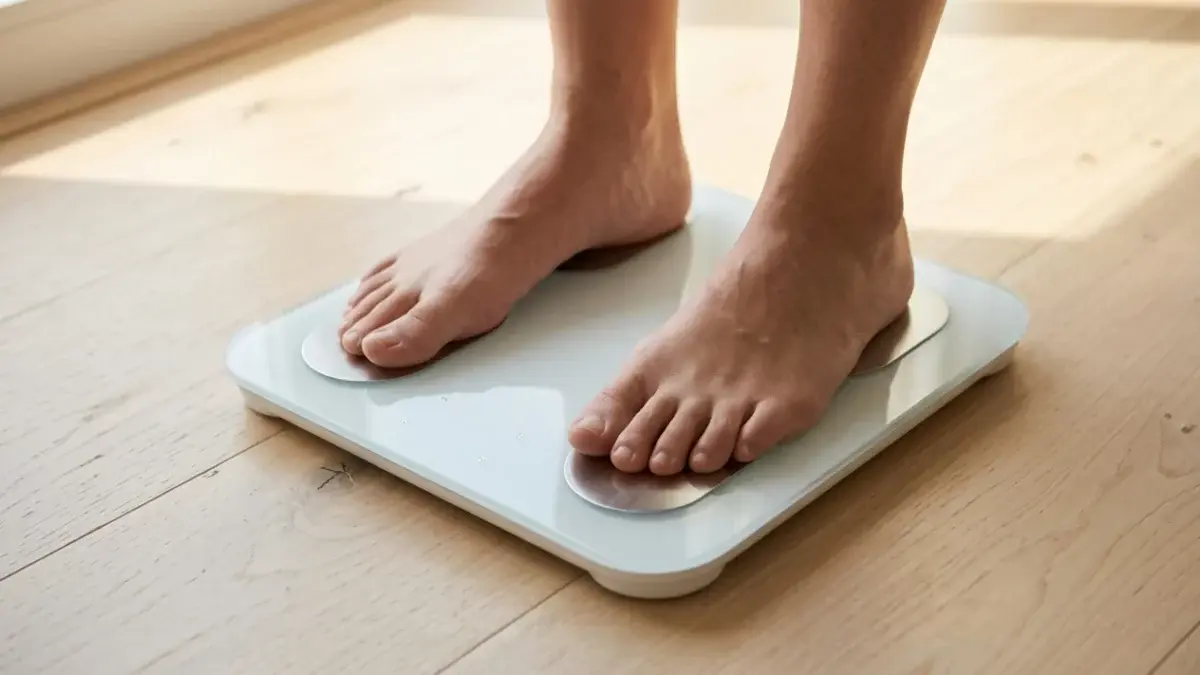
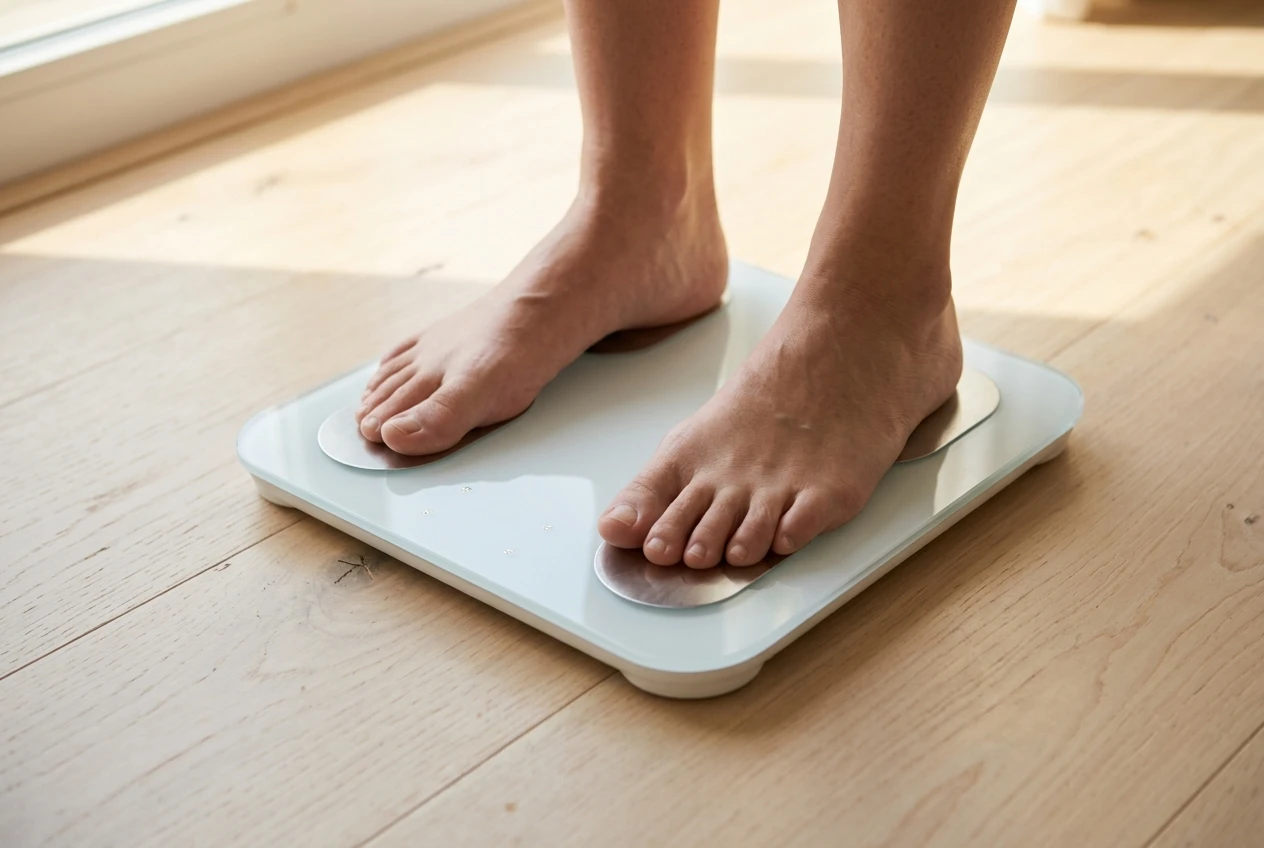
Most smart scales use a method called bioelectrical impedance. When you stand on the scale barefoot, it sends a very small electrical current up one leg and back down the other. Electricity travels more easily through water-rich tissue like muscle than through fat, so the scale measures how much the current is slowed and estimates your body makeup from that, together with the age, height and sex you entered in the app.
Here is what the main readings mean:
- Weight: your total body weight, measured with a built-in sensor, the same as any digital scale.
- Body fat percentage: the estimated share of your weight that is fat. It is a calculation, not a direct measurement.
- Muscle mass: the estimated amount of muscle in your body. Some scales show it in pounds or kilograms, others as a percentage.
- Body water: the estimated share of your weight that is water. It moves up and down with how much you have had to drink and eat.
Many scales add more figures, such as bone mass, metabolic age or visceral fat. Those are further estimates built on the same current reading plus formulas, so treat them with extra caution.
Why muscle matters more after 60 than the scale number
Muscle mass and strength tend to decline with age unless you work to keep them. That affects everyday things: getting up from a chair, climbing stairs, carrying groceries, and recovering your balance if you trip. Muscle is also what you use to stay independent at home.

For that reason, a lower number on the scale is not automatically good news after 60. Losing weight by losing muscle can leave you weaker even though you look lighter. Holding steady or gaining a little muscle while body fat comes down is a better result, even if the total weight barely moves.
This is where a smart scale earns its place. Watching the muscle reading alongside weight tells you whether your routine is protecting what you have. If your muscle number is slipping, that is a prompt to add strength work or to talk with your doctor about your diet and activity.
How to weigh yourself so the readings mean something
A single reading is a snapshot taken under whatever conditions happened that day. What you drank last night, what you ate, and how long you have been awake all change the result. The way to get something useful is to make the conditions the same every time and then look at the pattern.
Use the same routine for each weigh-in:
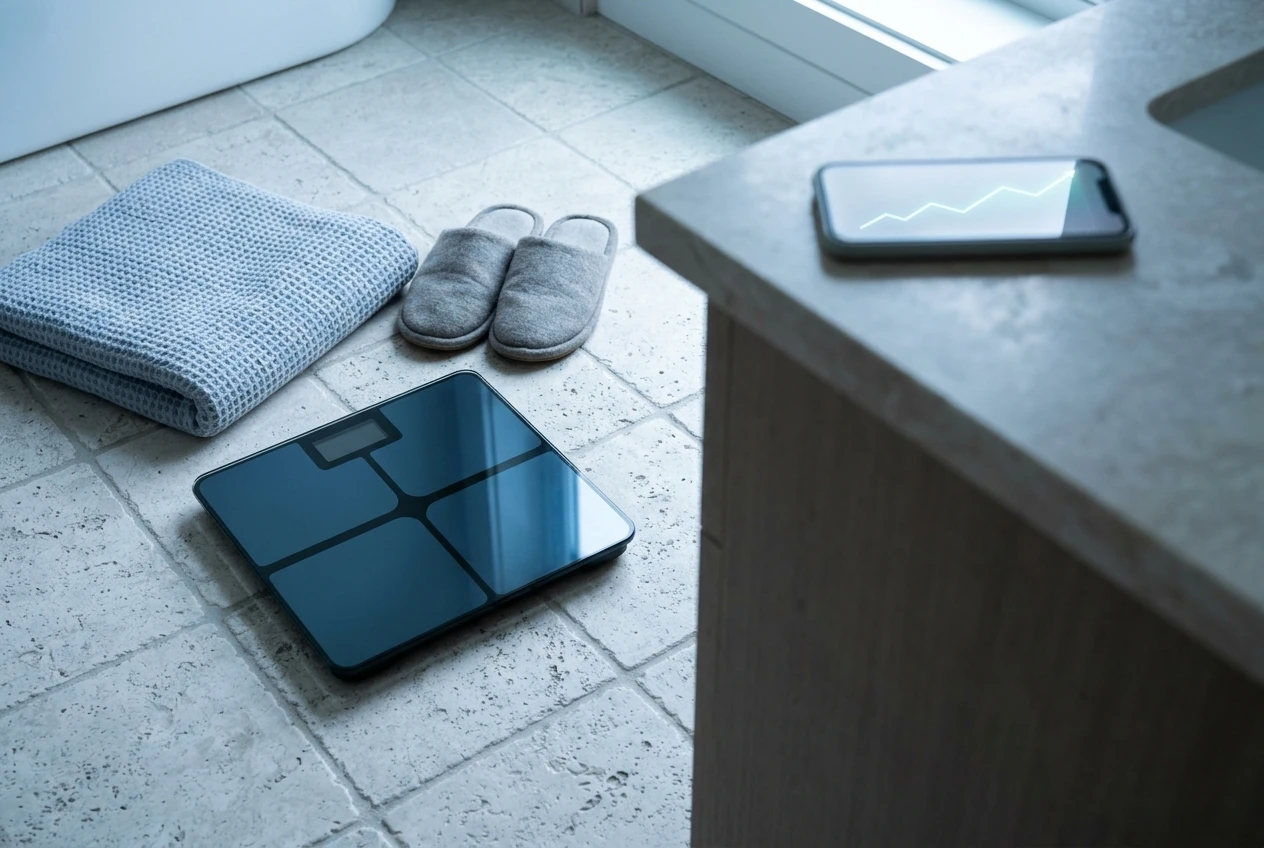
- Pick the same time of day. First thing in the morning, after using the bathroom and before eating or drinking, is the most common choice.
- Use the same spot. Put the scale on a hard, flat floor. Carpet can throw off the weight sensor and make the readings inconsistent.
- Stand barefoot with dry feet. The current needs direct contact with the metal pads, and lotion or wet feet can interfere.
- Wear the same thing, or nothing. Clothing weight adds up and varies.
- Stand still until the reading finishes. Talking and shifting around can affect the result.
Look at the weekly trend, not the daily number
Daily readings bounce around, so a day-to-day change usually says little about your progress. A better approach is to weigh in a few times a week, then compare the weekly average. Add the readings together and divide by the number of weigh-ins.
Then compare this week’s average with last week’s, and look at three or four weeks together. A slow, steady direction over a month tells you far more than any one morning. Most scale apps draw a trend line for you, so use that view and ignore the individual dots.
What smart scales get wrong: accuracy limits, hydration swings, and who should check with a doctor first
Home smart scales are estimates. They are generally not as accurate as clinical methods for measuring body composition, and different brands can give different body fat numbers for the same person on the same day. That is why the absolute number matters less than the change on your own scale. Pick one scale and stay with it, because switching brands resets your comparison.
Hydration is the biggest source of noise. Body water readings shift with how much you drank, how much salt you ate, whether you exercised, and whether you had alcohol or caffeine. Because the scale reads water-rich tissue as muscle-like, being dehydrated or well hydrated can nudge the muscle and fat numbers without any real change in your body. If a reading looks odd, check it again at the same time tomorrow before reacting.
Some people should speak to a doctor before using one at all:
- People with a pacemaker or another implanted electronic device. The scale sends an electrical current through the body, and manufacturers commonly advise against use with implanted devices. Ask your cardiologist or doctor first.
- People with conditions that affect fluid balance, such as kidney problems, heart failure or swelling in the legs. Fluid changes can make the readings misleading, and a sudden weight change in these conditions is something your doctor should hear about.
- Anyone who notices unexplained weight loss or gain. A scale cannot explain why it is happening, and a doctor can.
Check the scale’s instructions as well, since they list who should not use it.
Turning the numbers into a plan: walking, stretching and strength work from your living room
Numbers are only useful if they lead to action. A simple way to use them is to match what the trend shows with what you do that week. Before starting any new exercise program, check with your doctor, especially if you have a health condition or have been inactive.
If weight is steady and muscle is steady or rising, your routine is working, so keep going. If weight is falling and muscle is falling too, add strength work and talk with your doctor or a dietitian about whether you are eating enough. If body fat is creeping up while muscle falls, you likely need more movement and more resistance work.
A basic home routine covers three areas:
- Walking. It is easy on the joints and builds endurance, and it fits into any day. There is more on this in Benefits Of Walking.
- Stretching. It keeps joints moving through their range and makes daily movements easier. The reasoning is covered in The Importance Of Stretching For Seniors.
- Strength work. This is what protects muscle. Sit-to-stand repeats from a sturdy chair, wall push-ups, calf raises while holding a counter, and rows with a resistance band all work from a living room with almost no equipment.
For ideas on how to structure those sessions, Workouts for Seniors over the age of 60 lays out a place to begin. Strength work two or three days a week, with walking and stretching on the other days, gives the muscle reading something to respond to.
Give any change time. Muscle responds slowly, so check the trend over a month or two before you decide something is or is not working.
Features worth having and ones to skip
Scales vary a lot in price and in features. These are the ones that make a difference in daily use:
- App syncing. The scale should send readings to your phone automatically, since the trend chart is where the value is. Check that the app works with your phone and that you can export or view your history.
- Multiple users. If you share a home with a partner, the scale should recognize each person so one set of readings does not mix into the other’s.
- A large, clear display. You should be able to read your weight at a glance without bending down or squinting. A backlit, high-contrast display helps.
- Easy setup. Pairing should not take an afternoon. Look for clear instructions and a simple app.
- A sturdy, wide platform. A stable surface with a clear place to put your feet makes stepping on safer, and a weight limit that suits you matters.
Features you can safely skip:
- Long lists of extra metrics. Metabolic age, bone mass and similar figures are calculated from formulas rather than measured, and they can look more precise than they are.
- Extra connections you will not use, such as links to services you do not have.
- A higher price for a longer feature list. A basic model with a reliable app is enough to follow your weight, body fat, muscle and water trend.
If you want to see how a scale fits among other devices, The Smart Tech That Actually Earns a Spot in a Senior’s Living Room Gym covers the wider setup, and The Fitness Tracker Features That Matter After 60, and the Ones You Can Skip covers wearables that can complement your scale readings.
Start building your own site
If you’ve ever thought about building your own site around something you love, like fitness, take a look at how to get started on Wealthy Affiliate and sign up to see what’s inside.
